Open Hours:
Open Mon – Fri 10am – 5pm
Saturdays 10am – 2pm
Closed Public Holidays
Contact Us:
P: 02 6499 2201
E: secca@begavalley.nsw.gov.au
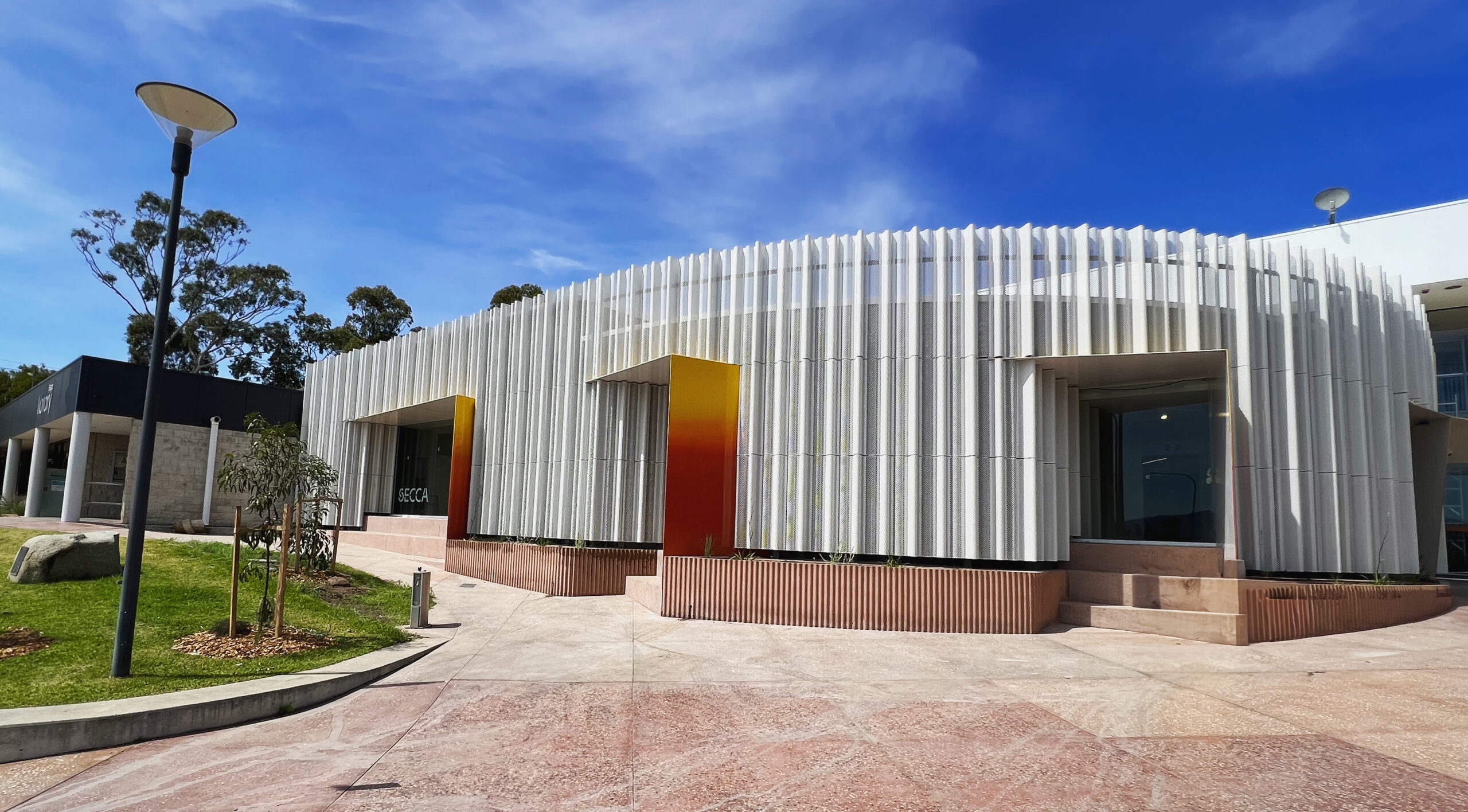
SECCA hosts touring exhibitions of national significance along with its own exclusively curated artistic program as part of its cultural tourism plan that is designed to engage tens of thousands of visitors to the region annually.
SECCA is an important resource for its artistically rich and diverse community and works collegiately with fellow professional arts organisations: fLiNG Physical Theatre, Four Winds Festival and South East Arts who collectively deliver engaging, challenging and innovative programs of both artistic and educational excellence.
SECCA brings our community together, to build and share our identity, history, creativity and culture, through engagement with the arts. SECCA stimulates, develops and enhances the diverse visual culture of the region through viable, accessible, dynamic and relevant exhibition, education and collection programs.
A growing number of national and state arts institutions are partnering with the SECCA to deliver valuable and vibrant visual arts programming to the South East, these include the Art Gallery of NSW, The National Maritime Museum, The Australian War Memorial, Museums & Galleries NSW, Murray Art Museum Albury (MAMA), Queensland Art Gallery/Gallery of Modern Art and University of New South Wales Art & Design.
